
The Cruelest Month
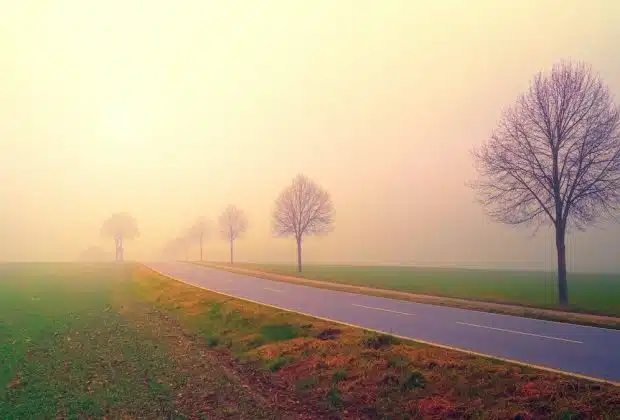
April is the cruelest month. T.S. Eliot may have written it, but we fishermen live it. April is the pitiless prank that offers a taste of spring - daffodil and crocus popping through recently thawed soil near a sun-warmed stone - then slaps you in the face with bitter cold rain driven by a thirty-knot "breeze." How is it I feel so much more comfortable in December, knee deep in frigid water, the thermometer hovering near freezing, than I do in April with the same instrument now reading a much warmer forty-five? Part of it's my own fault. In January, I dress for winter. In April, I dress for summer. I never learn. But if you have more sense than I do and clothe yourself appropriately - with a half-dozen layers of wicking fabric and a waterproof, breathable wind shell between you and the wind (what are we up to here, $900 worth of Patagucci® fashioned from recycled six-pack totes and orange-juice jugs?) - you may want to rethink that hasty statement about the cruelty of April. Spring can be very generous when it comes to trout fishing. You simply need to fish the between times.
The between times (periods of relatively clear water between episodes of snowmelt runoff) are often times that produce good fishing. But there's a catch - between times are not so much periods of weeks as unpredictable periods of days, sometimes hours, surrounded by chocolate-soup chaos. Last night's freezing cold may yield clear rivers only until the warmth of the day brings down enough muddy melt to cloud the water and make it practically unfishable. A three-day cold snap may yield to a weeklong hot spell, and what had been a few days of relatively clean water will become full-blown runoff for a while. During periods of clear water, however long they last, the fishing will likely be excellent.
The water doesn't have to be perfectly clear to catch fish; in fact, a little color in the water can be helpful - it keeps the trout from seeing you. You can get closer to the fish and use a technique that is more difficult to use in water that is clear - tight lining. Tight lining simply means standing close enough to where you're fishing to hold most of the fly line off the water and the leader under slight tension. You maintain a good drift by following the path of the fly with the tip of the rod. The technique creates a direct sense of the take, and hookups are usually solid. Anglers sometimes tight line nymphs on rivers like the San Juan where trout tend to be more picky than spooky, but tight lining can work in any kind of water - even with spooky fish - if you use natural cover, like boulders and vegetation to conceal your presence. But the somewhat off-color water that often occurs between periods of heavy runoff allows anglers to fish a tight line even in places with only limited cover, places where the trout ordinarily don't let you get that close.
This is an especially effective technique to use with streamers - flies that imitate baitfish. Fish a weighted streamer, preferably with the weight at the head. If you use an unweighted fly, before tying it on slide a bullet-head weight up your leader. After you've tied on the streamer, the weight will slide down and jam against the eye of the fly. Fish the rig on a short line under tension close to boulders, along the dropoffs by the bank, anywhere a trout might be holding away from the strongest currents of a swollen river. Let the fly drift with the current. Jig it up and down. Experiment. When you see a trout dart out to take your fly, resist the instinct to rear back on the rod. Tight lining a streamer is an adrenaline sport. The sudden flash of a fish can cause you to react too quickly, yanking the fly away before he has it securely in his mouth.
After a few heart-stopping swirls by big trout that appear out of nowhere you'll forget all about the cruelty of April. Somehow, the cold wind and rain won't matter. In April, during between times, big trout eat bushy streamers and dance downriver with your dreams in tow, sometimes coming to hand before being released. During those times, April is very kind, indeed.
Steven J. Meyers has called the San Juans home since 1976. He has been Visiting Instructor of Creative Writing at Fort Lewis College since 2000. His published books include On Seeing Nature, Lime Creek Odyssey, Streamside Reflections, The Nature of Flyfishing, Notes from the San Juans, and San Juan River Chronicle.
Post a comment
www.insideoutsidemag.com doesn't necessarily condone the comments here, nor does it review every post.
Read our full policy.